For most people in India, stock market investing just means investment in stocks listed on the NSE and BSE.
Yes, most of the beginner investors think that way without realizing that they are missing out on something very important - Unlisted shares or Unlisted stocks. Unlike the stocks you see on your trading screen, these shares don't trade on any exchange.
Yet a lot of people invest in these shares. But how? In simple words, these shares are traded privately through direct deals between buyers and sellers. Before investing, it is important to understand what are unlisted shares, how they are different from listed ones, the most common myths, benefits, and risks involved, and how to buy these shares as a beginner.
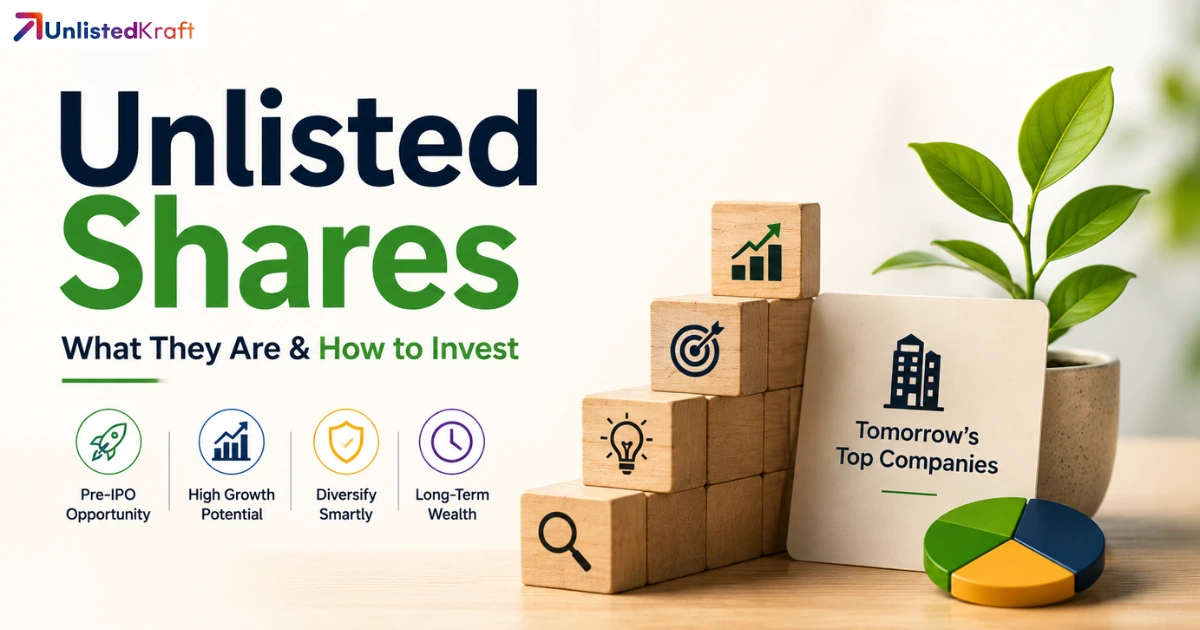
What Are Unlisted Shares?
Unlisted shares are the shares of companies that are not listed on the stock exchanges like NSE or BSE. They are traded privately as a direct sale and purchase of shares, generally facilitated by intermediaries or dedicated platforms.
The fact that these shares are not publicly traded does not imply that these are small or struggling companies. In fact, there are well-known companies in India that are performing well but are still unlisted on the stock exchange. The biggest example is the National Stock Exchange itself, which is still unlisted and is traded privately.
Now, the moment most people hear about these shares, they get confused with questions like Is this even legal? Is this only for the rich people? Can I really trust this market? These are fair questions, but most of them are based on myths that have been considered for years.
Before we go further, let's quickly understand a few things people commonly get wrong about unlisted shares in India.
Myths about Unlisted Shares
Most investors who have just begun their investment journey avoid investing in unlisted companies because of some very common misconceptions. Here are a few key myths and the truth behind them.
Unlisted Stocks are illegal: This is probably the biggest misconception. Just because something doesn't trade on NSE or BSE doesn't make it illegal. The trading in unlisted stocks is legal in India.
Only wealthy investors can buy: A few years ago, access to the unlisted market was limited, minimum ticket sizes were high, and you needed the right connections. But that has changed significantly. Today, there are dedicated platforms and intermediaries in India that offer investment opportunities to regular retail investors as well.
Once you invest, your money is stuck forever: These shares are less liquid than stocks trading on an exchange. But that doesn't mean the money is stuck forever. You can sell through the same platforms and intermediaries you bought from, find buyers in the unlisted share market, or wait for the company's IPO.
Prices are not transparent: This is a fair concern, especially for a market without a centralised exchange. But prices in the unlisted market are based on the company's financials, recent deals, comparable listed peer valuations, and the company's IPO potential. Reputed intermediaries maintain pricing based on real transaction data.
But what makes these shares different from the listed ones? Let’s explore.
Difference between Listed and Unlisted Shares
Here’s a simple comparison to understand the difference:
Basis
Listed Shares
Unlisted Shares
Trading Platform
Traded on stock exchanges like NSE and BSE
Traded privately between buyers and sellers through intermediaries
Price Movement
Prices change continuously during market hours
Prices are based on private deals and market demand
Liquidity
Easier to buy and sell anytime during trading hours
Lower liquidity, as finding buyers or sellers can take time
Transparency
Financials and disclosures are publicly available regularly
Limited public information compared to listed companies
Regulation
Strictly regulated by SEBI and stock exchanges
Comparatively less regulated
Risk Level
Generally considered relatively safer
Usually carries a higher risk
Investment Stage
Mostly established public companies
Includes private, pre-IPO, or growing companies
Benefits of investing in unlisted shares
While these stocks carry their own risks, some benefits make them worth exploring. Here are a few of the key benefits:
High-Growth Opportunity: You can invest in a company that is still not listed on the stock exchange. If the company later launches a successful IPO, early investors can benefit because the value of their shares may increase after the company gets listed on the stock market.
For example, before the IPO of Tata Technologies in 2023, many people had bought its unlisted shares at lower prices. After the company was listed, the share price increased sharply, which raised the value of their investments. Even though some investors could not sell immediately due to the lock-in period, their investment value had already grown significantly.
Lower valuations: Since there's no exchange-driven demand pushing up the price, these shares are often available at more reasonable and lower valuations.
Portfolio diversification: They offer the opportunity to diversify your investments beyond traditional asset classes. The price movement in the unlisted share market is not relatively correlated with daily stock market movements. This helps you spread and mitigate the risk of your investments.
Lower Impact of Daily Market Volatility: Listed stocks often move sharply because of daily news, global events, or short-term market sentiment. On the other hand, unlisted stocks are not traded every second like exchange-listed stocks. As a result, they are generally less affected by day-to-day market volatility and short-term panic selling.
But, besides these practical benefits, investment in unlisted shares also carries some risk factors that are equally important to consider.
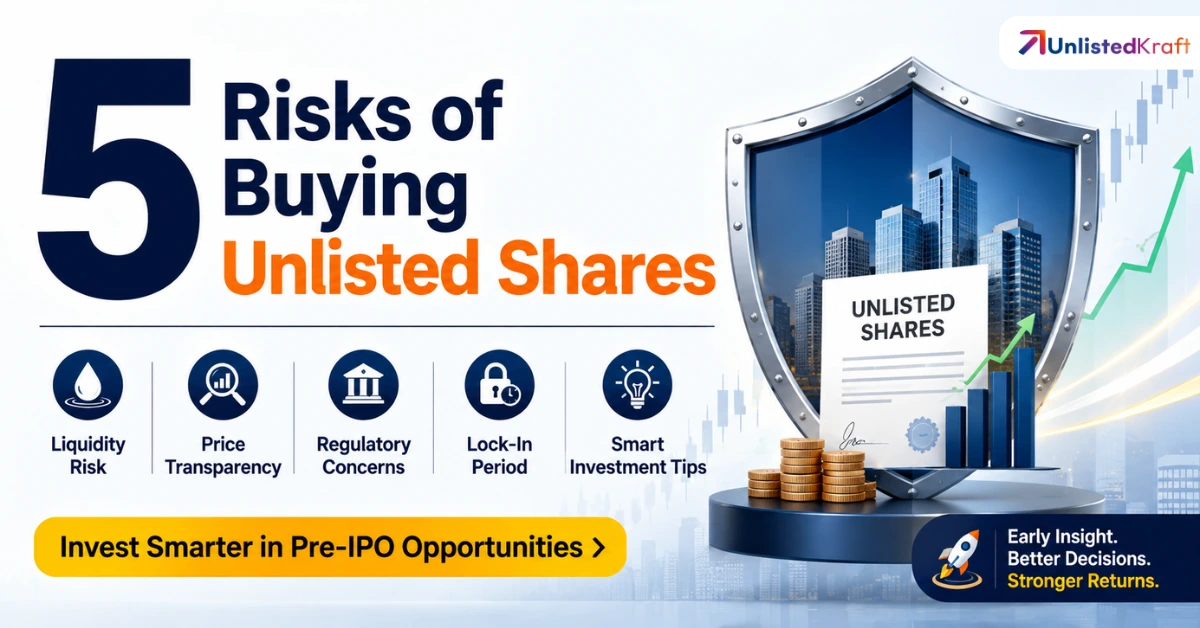
Risks of Investing in Unlisted Shares
Here are some of the key risks:
Liquidity Risk: Unlisted shares carry less liquidity. Unlike listed shares, which you can sell in seconds, finding the right buyer for these stocks can be difficult and time-consuming.
Less regulatory oversight: Listed companies are required to publish detailed financial results, follow SEBI norms, and disclose material information. Unlisted companies have fewer such obligations, which means investors need to be more careful about due diligence.
No Guaranteed IPO: While investing, many investors expect to buy at a low price and gain good returns through an IPO. But there is no guaranteed IPO; a company may delay it for years, cancel it, or face regulatory obligations by SEBI.
Limited Validated Information: Unlisted companies generally do not require publishing quarterly reports to disclose major decisions. This becomes challenging for beginner investors to analyse the company’s performance and monitor their investments.
How to buy unlisted shares?
Several intermediary platforms facilitate the trading of these shares. They maintain networks of buyers and sellers, give you indicative prices, and handle the transfer paperwork. If you are looking for a trusted platform to get started, UnlistedKraft makes the process simple and transparent.
Complete your KYC and link your demat account.
Browse available companies and their prices.
Place an order for the quantity you want.
Make the payment.
Shares are transferred to your demat account
Note: Transfer of shares to the demat account may take 2 to 5 business days, depending on the transfer method or intermediary you are associated with.
There are more options to buy these shares, like buying them from existing shareholders or employees having ESOPs (Employee Stock Ownership Plans) and Alternative Investment Funds (AIFs), and wealth management firms. However, for someone just starting, investing through a trusted platform or intermediary is the simplest and most recommended method.
Summary
Unlisted shares are traded privately through intermediaries or unlisted share trading platforms. They offer some genuine opportunities, including the chance to invest before an IPO, access companies at lower valuations, and diversify beyond traditional markets.
At the same time, these shares come with some real risks as well, like lower liquidity, limited information, and no guaranteed IPO. The key to investing safely involves researching properly, investing through trusted platforms, and treating it as a long-term commitment rather than a shortcut to quick returns.
Frequently Asked Questions
How do I invest in unlisted shares?
You can invest through registered intermediaries or dedicated online platforms to buy unlisted shares that facilitate the buying and selling of unlisted stocks.
Is it safe to invest in unlisted stocks?
Although unlisted shares carry risks like liquidity, limited information, and no guaranteed IPO, they are not unsafe if approached carefully with a reliable platform, investor awareness, and thorough research of the company before investing.
Are unlisted shares a good investment?
Unlisted stocks can be a good investment for those with a long-term investment vision and higher risk-taking capacity. They offer the potential for strong returns, especially if the company gets a high valuation through an IPO.
What are the disadvantages of buying unlisted shares?
The key disadvantages include lower liquidity, limited financial disclosures, no guaranteed IPO, valuation uncertainty, and comparatively less regulatory oversight.
How much tax is on unlisted shares in India?
The tax on unlisted stock investments depends on how long you hold them. If you sell within 24 months of buying, your profit is taxed as Short-Term Capital Gain (STCG) at your applicable income tax slab rate. If you hold for more than 24 months before selling, your profit is taxed as Long-Term Capital Gain (LTCG) at a flat rate of 12.5% without any indexation benefit.
Can I buy unlisted shares without a demat account?
No, a demat account is mandatory to invest in unlisted shares. Just like listed shares, these shares are held in dematerialised form and are transferred directly to your demat account after the transaction is completed.
Disclaimer: This blog is for informational purposes only and does not constitute investment advice. Investing in unlisted shares involves risks. Always consult a professional before making any investment decisions.
Author: Komal Bhatt
Komal Bhatt is a finance content writer at InvestKraft, specialising in well-researched articles on financial products, stock markets, and investment opportunities, with a particular focus on unlisted shares.
She holds a Master’s degree in Commerce from the University of Delhi, which gives her a solid academic foundation in finance and business. With over three years of hands-on experience in creating digital finance content, Komal has developed a clear understanding of investor needs through her work on wealth management, NISM certification programs, and market education materials.
Komal is passionate when it comes to breaking down complex financial concepts into simple, accurate and actionable insights. Her goal is to help everyday investors understand markets better and make more informed decisions based on reliable, research-backed information.
 amit@unlistedkraft.in
 +91-8796470040
 +91-8796470040







.webp)
 (1).webp)


 +91-9599071664
 amit@unlistedkraft.in